The fishing of mackerel, frigate mackerel and tuna in the Andalusian coast’s dates back to the time of the Phoenicians and Tartessians. In 5th century B.C. Athens, the co-mediographer Eupolis spoke of the prestigious salted tuna and “escombros” (mackerel) from Gades (Cadiz).

Along with fishing, the processing industry developed in Roman times. Multiple salting factories were created along the entire Andalusian coast, around which cities were founded, such as the well-known ruins of Baelo Claudia in Bolonia (Tarifa). Garum, which was the most popular sauce in the Roman diet, was also obtained from the mackerel in these factories.

Later, the Arabs, after observing the migratory habits of these fish, devised a revolutionary fishing method, based on a gigantic trap of nets and cables. This is what has been known ever since as ALMADRABABA.

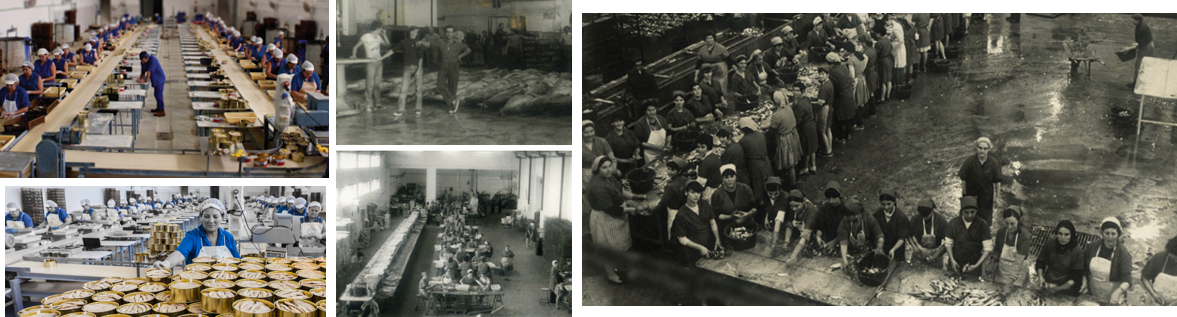
From the 18th century onwards, a process of progressive evolution and large-scale production began, culminating in the creation of modern canning factories, the driving force of the area's economy.


Today, the Andalusian canning industry continues to maintain the high-quality characteristics that differentiate it.


Conservera de Tarifa maintains its spirit of family tradition, which generation after generation, has preserved for more than a century, the artisan character in the elaboration of the product.